Brightening Spaces: An Craft of Natural Light Evaluation


In the domain of building, the importance of sunlight can hardly be emphasized. Daylight analysis has emerged as a critical instrument for contemporary architects, empowering them to design spaces that enhance natural illumination while guaranteeing energy efficiency and inhabitant comfort. As urban settings become ever dense and our attention shifts toward eco-friendliness, understanding how to utilize daylight is more crucial than ever. Daylight Analysis Glastonbury Somerset detailed guide investigates the multiple factors of sunlight evaluation, arming architects with the insight they need to construct healthier, more effective buildings.
From the nuances of daylight factor and spatial light independence to the function of daylight analysis in achieving LEED certification, this piece dives into the techniques and innovations that can improve architecture. By analyzing the effect of natural light on energy use, user comfort, and total building efficacy, we can appreciate the significant role sunlight plays in defining our constructed surroundings. Accompany us as we illuminate the environments of what's to come through the art and method of light assessment.
Grasping Daylight Evaluation
Daylight analysis is a critical aspect of building design that centers on improving the incorporation of natural light throughout structures. By evaluating how daylight flows into and collides with internal areas, designers can enhance the aesthetic appeal, practicality, and sustainability of their projects. This analysis helps inform decisions about window positioning, material choices, and overall building orientation, guaranteeing that areas are bright and comfortable for inhabitants.
The process of daylight analysis generally involves multiple simulation tools and methodologies to determine light availability over the year. These tools enable architects to measure key parameters such as daylight factor, area daylight independence, and annual sunlight exposure. By applying these results, architects can design environments that maximize daylight while minimizing dependence on electric lights, ultimately contributing to lower energy use and operating costs.
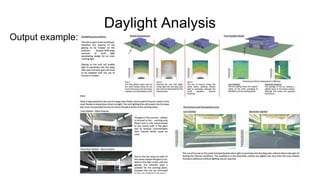
In alongside sustainability, daylight analysis holds a major role in promoting the health of users. Daylight has been demonstrated to improve mood, efficiency, and wellness. By integrating daylight analysis into their design strategies, architects can design environments that support biophilic concepts and improve the overall quality of life for their occupants. This multifaceted approach is essential in today's architecture, where the interplay between natural light and built environments is more and more acknowledged as essential to environmentally sensitive design.
Enhancing Structures through Natural Light
Infusing sunlight assessment in the creative design allows designers to design spaces that not just satisfy visual standards but also enhance usability and user comfort. Through grasping the way that sunlight interacts in conjunction with architectural features, creators can take knowledgeable judgments about window positioning, room orientations, and mass configuration. This method ensures that environments are properly illuminated, reducing dependence for artificial lighting throughout the day, which ultimately conserves energy and reduces operational costs.
The use of sunlight modeling instruments provides valuable understandings into the way different design choices can increase natural light but reduce harsh light and overheating. For example, analyzing the impact of building facade alignment and window glass choice can lead to better outcomes in terms of climate control and energy efficiency. By examining elements such as natural light shelves and sunlight redirection techniques, planners can enhance sunlight uptake and dispersal throughout areas, creating a welcoming atmosphere for inhabitants.
Furthermore, a thorough natural light study adds to eco-friendly design by backing crucial certifications like LEED Certification and BREEAM. These frameworks recognize developments that value natural light access and energy efficiency, assisting to lower the entire carbon footprint of buildings. Thus, designers who utilize sunlight assessment merely enhance the integrity of their designs but also position themselves with the growing need for sustainable construction practices in the current marketplace.
Sunlight Analysis Instruments and Techniques
Various instruments and methods exist to assist effective sunlight analysis in architectural design. Leading software options include Radiance, ClimateStudio, and Vision, all providing unique capabilities tailored to different aspects of light management. Radiance is well-known for its accuracy in representing light behavior and reflected light, making it suitable for in-depth evaluation. ClimateStudio, on the other hand, offers a intuitive interface and integrates seamlessly with additional development software, allowing for prompt assessments of sunlight performance. Vision, part of Autodesk System, offers visualization features that enable architects evaluate daylight impacts in on-the-fly as they develop their designs.
Additionally to program tools, techniques such as Climate-Based Daylight Modeling (CBDM) enhance the development process by taking into account seasonal changes and location-based factors. CBDM permits architects to analyze how ambient light will affect with a building throughout the seasons, maximizing visual comfort for occupants. Another important approach is the use of modeling to examine metrics like sDA and ASE, which provide understandings into how well daylight enters into inhabited spaces.
Ultimately, incorporating daylight assessment early in the conceptual design phase is crucial for optimizing advantages. Daylight Analysis Nailsea Somerset permits architects to make educated decisions about building alignment, window placement, and material selection based on collected information. By utilizing a blend of contemporary instruments and methods, architects can create environments that not only capture natural light but also enhance occupant satisfaction and power savings.